
Home > Applications > District Energy Systems
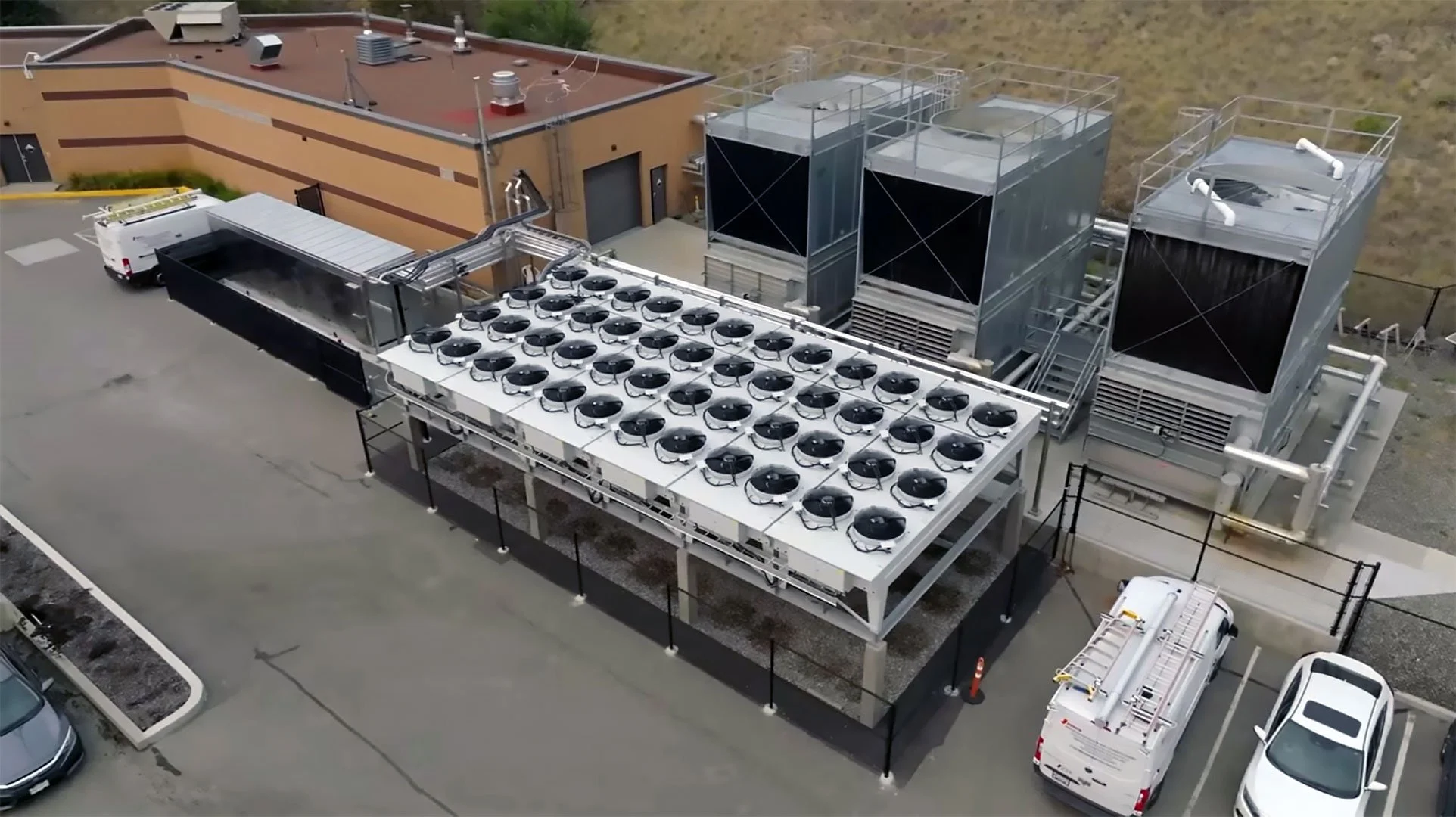
Vitalis Coolshift™ 1.5 MW reversible R744 (CO2) air-source heat pump (ASHP)—the largest known R744 ASHP deployed for a district energy system in North America—for the University of British Columbia – Okanagan Campus (UBCO) in Kelowna, B.C.
Low-Carbon District Energy Systems
Meeting sustainability targets for campuses and other thermal energy networks often requires moving away from gas boilers and toward cleaner technologies, such as heat pumps, to achieve large reductions in carbon emissions. However, not all heat pumps are created equal.
Vitalis R744 (CO2) heat pumps excel in low-carbon district energy applications, especially in systems with low return temperatures.
For high-temperature applications, R744 heat pumps can serve as the first stage in a dual-stage setup, boosting overall efficiency and reducing the charge of a more dangerous or higher-GWP refrigerant in the second stage.
Low-temperature ambient-loop systems are ideal for R744 heat pumps. Under subcritical CO2 operation (half of typical transcritical operating pressures), the coefficient of performance (COP) can reach values as high as 7, exceeding those of existing alternatives.
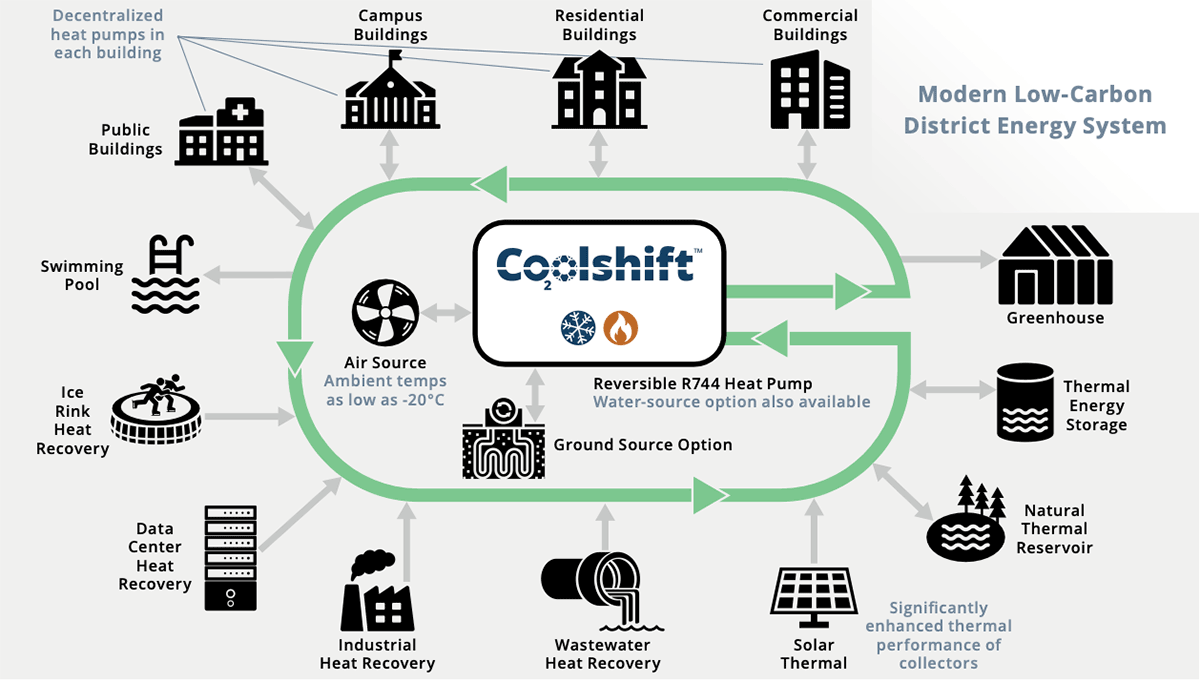
Maximum efficiency and flexibility are hallmarks of low-carbon thermal energy networks utilizing CO2 heat pumps.
Highlights
-
Compact system sizes vs. alternatives
-
Simpler, lower-cost pipe infrastructure with minimal heat loss
-
Safe and environmentally responsible: non-toxic, non-flammable, ultra-low global warming potential (GWP) of 1, and no PFAS pollution
-
Heating plus summer cooling (decentralized heat pumps to lift the supply temp for heating; direct cooling option using the thermal source network)
-
More cost-effective implementation of shallow geothermal boreholes by using CO2 heat pump
-
Superior performance when the return temperature is below 49°C (120°F) or when the temperature difference between supply and return exceeds 30°C (54°F) for applications requiring supply temperatures below 90°C (194°F)